Bake a no-knead focaccia if you have olive oil and flour
Key Takeaway
With flour, olive oil, and yeast, you can bake fragrant homemade focaccia in a single 23 x 33 cm rectangular pan.
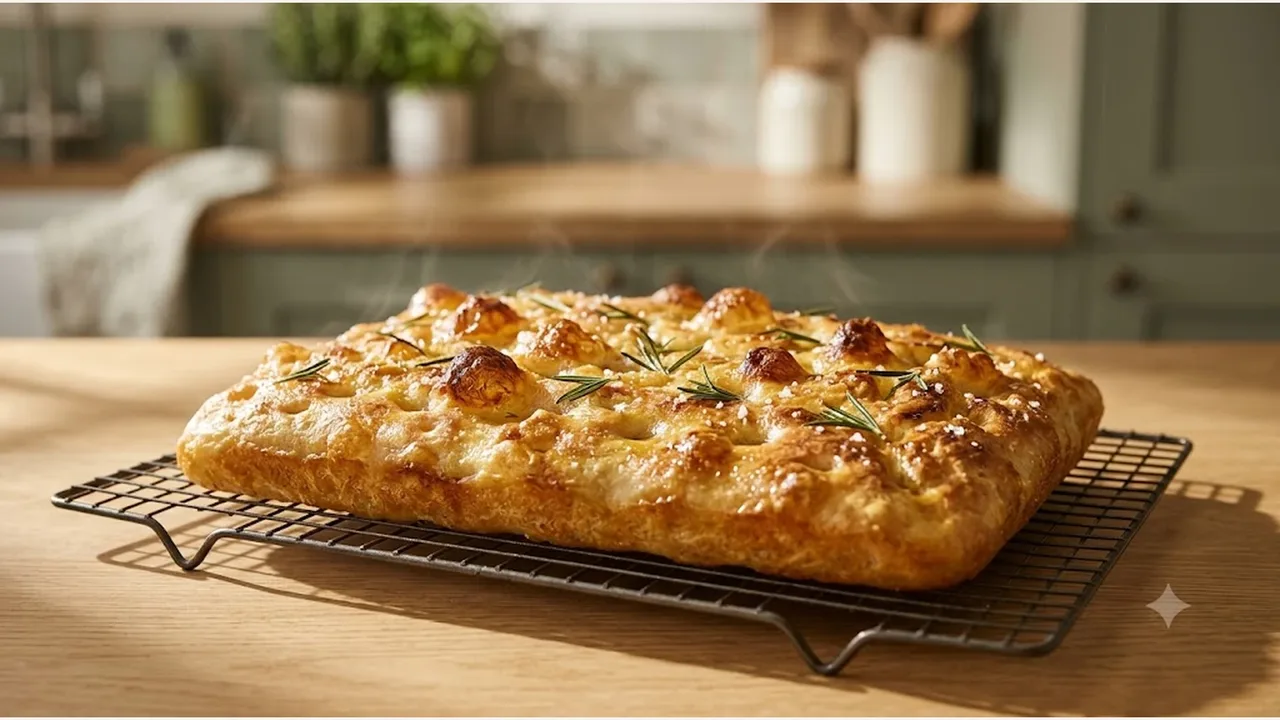
There is no mixer or strenuous kneading involved: simply mix the ingredients with a sturdy spatula, let the dough rise directly in the oiled pan, and bake in a 190°C oven. Below are the ingredients and measurements, oven settings, preparation steps, and key tips to avoid mistakes.
What can you bake with olive oil and flour?
Focaccia is a classic Italian flat yeast bread known for its airy, tender crumb and golden crust. While similar to pizza dough, it is baked thicker in an olive oil-lined pan so the bottom fries gently to a crisp crunch while the inside stays soft and open-crumbed.
The high hydration in the formula allows the bread to develop light texture without intense gluten development through kneading. Instead of shaping loaves, you gently pour the batter-like dough into the pan and dimple the surface with your fingertips. Serve it dipped in extra virgin olive oil and balsamic vinegar, or split it horizontally for hearty sandwiches.
What ingredients and measurements do I need?
Measuring units: T means one level Korean table spoon (about 15 ml), and t means one teaspoon (about 5 ml).
| Ingredient | Amount | Preparation |
|---|---|---|
| All-purpose flour | 420 g | Fluffed or whisked to remove lumps |
| Warm water | 340 g | Lukewarm water at 38 to 43°C |
| Instant yeast | 1 T (about 9 g) | Room temperature |
| Fine table salt | 1 1/4 t (about 8 g) | |
| Extra virgin olive oil (for dough) | 3 T (about 35 g) | |
| Extra virgin olive oil (for pan base) | 2 T (about 25 g) | |
| Extra virgin olive oil (for drizzling) | 1 T (about 13 g) | |
| Dried rosemary (topping, optional) | 1 t | |
| Coarse sea salt (topping, optional) | 1/2 t |
A 23 x 33 cm (9 x 13-inch) metal pan works best. Metal conducts oven heat efficiently, giving the bottom and side crusts their signature crunch far better than glassware.
What temperature and how long should I bake it?
| Oven temperature | Baking time | How to tell it is done |
|---|---|---|
| 190°C (375°F), preheated oven | 25 to 30 minutes | The top turns a deep golden brown and the edges look crisp |
Ovens vary in heating strength, so inspect the loaf around the 25-minute mark. If the crust remains pale, allow an extra 2 to 3 minutes for proper color and crispness.
What steps should I follow?
- Lightly grease a 23 x 33 cm pan with neutral oil, then pour in 2 T (about 25 g) of extra virgin olive oil and spread it across the entire bottom.
- In a large mixing bowl, combine 420 g all-purpose flour, 340 g warm water, 1 T (about 9 g) instant yeast, 1 1/4 t (about 8 g) fine salt, and 3 T (about 35 g) olive oil.
- Beat vigorously with dough beaters on a hand mixer or a sturdy silicone spatula for 60 seconds until no dry flour remains. A soft, sticky dough will form.
- Scoop the dough into the prepared pan and gently ease it toward the corners with your spatula. Cover loosely with plastic wrap or a damp cloth, and let rise at room temperature (20 to 23°C) for 60 minutes.
- Once the dough has puffed up across the pan, preheat the oven to 190°C.
- Oil your fingertips with a little olive oil and press firmly down into the dough until your fingers reach the bottom of the pan to create deep dimples. Drizzle 1 T (about 13 g) of olive oil over the surface and sprinkle 1 t dried rosemary and 1/2 t coarse salt evenly.
- Bake in the preheated 190°C oven for 25 to 30 minutes. When deeply golden brown, remove from the oven, let rest in the pan for 5 minutes, then transfer to a wire cooling rack so the bottom stays crisp.
What should I keep in mind to prevent mistakes?
- Do not reduce the 2 T of olive oil at the bottom of the pan. It acts as a frying medium in the hot oven, creating the indispensable golden crunch and preventing sticking.
- Keep the water temperature comfortably lukewarm at 38 to 43°C. Water over 50°C kills yeast, while cold water slows down fermentation past the 60-minute window.
- Dimple the dough deeply until you feel the bottom of the pan beneath your fingertips. Timid surface pressing will disappear as the bread expands in the oven.
- Do not let the baked focaccia sit in the pan for long after baking. Trapped condensation will soften the crisp bottom crust; transfer it to a wire rack after 5 minutes.
- Never taste or consume raw flour or unbaked dough, and wash hands and utensils thoroughly with soap after handling. Exercise caution if you have wheat flour or olive allergies.
Frequently Asked Questions
Can I bake it in round pans if I do not have a rectangular pan?
Yes. Divide the dough between two 23 cm round cake pans or a 25 cm cast-iron skillet with similar base area. If the dough thickness is comparable, the baking time remains 25 to 30 minutes.
How should I store leftover focaccia?
Keep it at room temperature in an airtight container for up to two days once cooled completely. For longer storage, slice into convenient portions, wrap tightly in plastic, freeze, and reheat in an oven or skillet before eating.
Can I add vegetables or cheese on top?
Pitted olives, halved cherry tomatoes, and fresh rosemary work well. Pat watery vegetables dry with a paper towel first so the top surface does not turn soggy during baking.
Sources & Verification Date
- No-fuss focaccia recipe and baking formula · Verified
- Focaccia pan choice and olive oil baking tips · Verified
All materials have been verified from official announcements and may have changed since verification.