Bake Milk Bread If You Have Bread Flour and Milk
쿠팡 파트너스 활동으로 수수료를 받을 수 있음
This page contains Coupang Partners affiliate links; the operator may earn a commission.
Key Takeaway
With bread flour and milk you can bake soft milk bread using a cooked tangzhong starter. It makes one 23×13 cm loaf in about 3 hours 25 minutes. Judge proofing by how far the dough has risen, not by the clock.
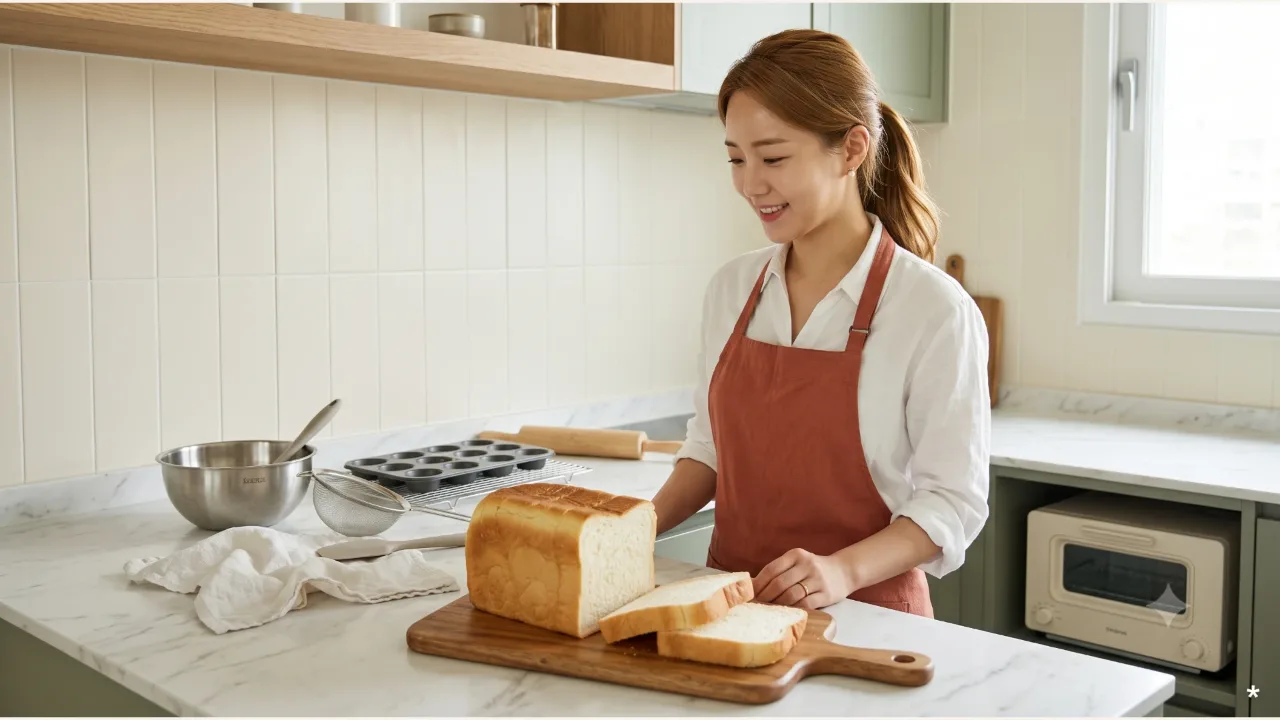
What ingredients do you need?
Spoon measures: a tablespoon here is one regular Korean table spoon, leveled off (about 15 ml), and a teaspoon is one teaspoon (about 5 ml).
| Ingredient | Amount | Note |
|---|---|---|
| Bread flour, water and milk for the tangzhong | 14 g, 43 g and 43 g | Measure separately from the main dough |
| Bread flour for the main dough | 300 g | |
| Nonfat dry milk | 14 g | |
| Sugar and salt | 50 g and 6 g | |
| Instant dry yeast | 1 tablespoon (Korean table spoon) | |
| Milk for the main dough | 113 g | Also set aside 1 tablespoon of milk for brushing the top |
| Large egg | 1 | |
| Unsalted butter | 57 g | Melt it, then cool until lukewarm |
Why is it easier to make the tangzhong first?
Make the tangzhong before measuring anything else. Whisk 14 g of bread flour, 43 g of water and 43 g of milk together in a saucepan, cook over low heat until thick, and cool it to lukewarm before it goes into the main dough. It takes a while to cool, so if you start the tangzhong first and measure the main dough ingredients in the meantime, you spend less time waiting.
Adding hot tangzhong right away can affect the yeast. Cool it until it feels lukewarm, not hot, when it touches the back of your hand.
How do you make it, step by step?
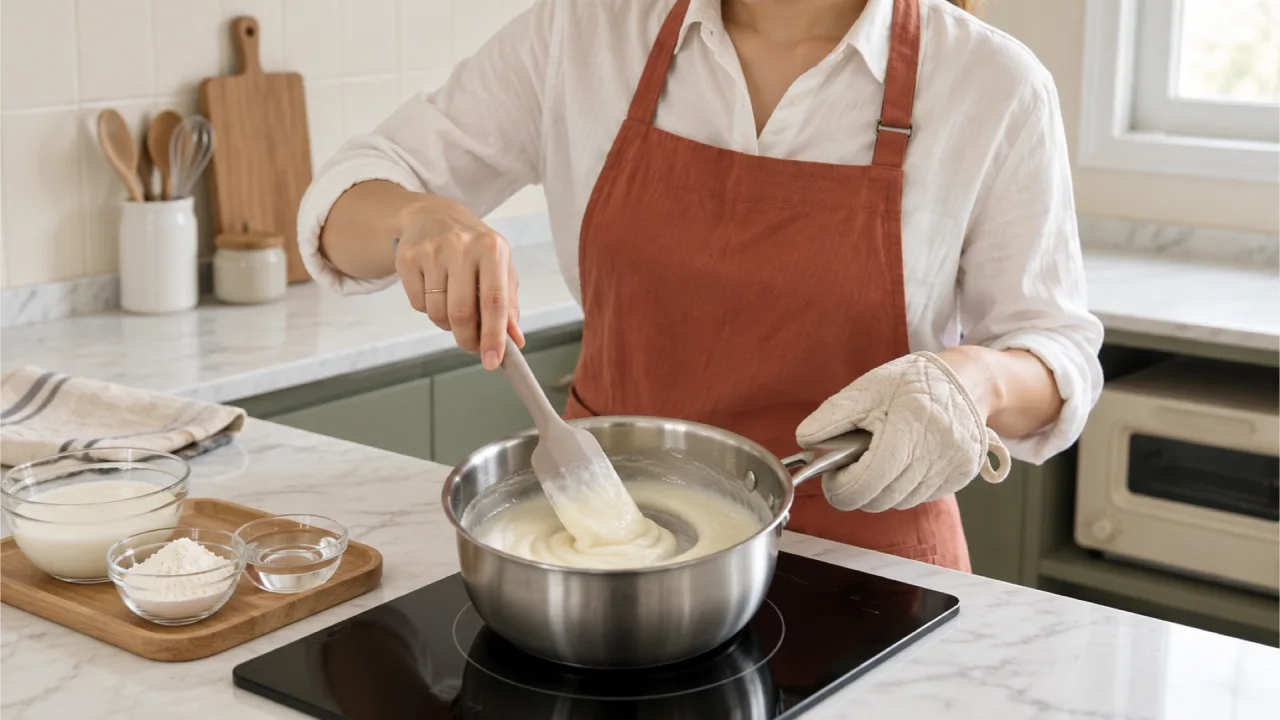
- Start with the tangzhong described above. Whisk the tangzhong flour, water and milk together in a saucepan and stir over low heat for 3 to 5 minutes. When it becomes a paste that holds a line when stirred, turn off the heat and cool it to lukewarm.
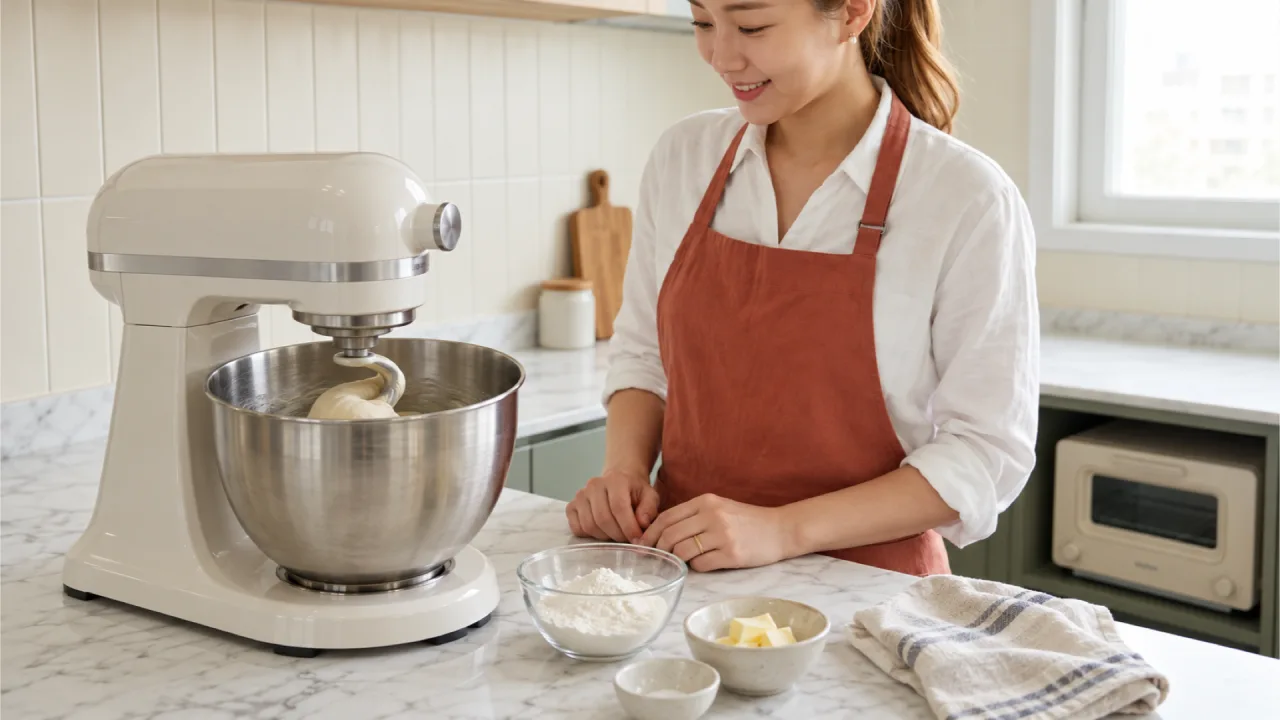
- Put the tangzhong and the main dough ingredients in the stand mixer and knead until the dough is smooth and elastic. Allow about 15 minutes, and check the mixer's manual and the dough itself.
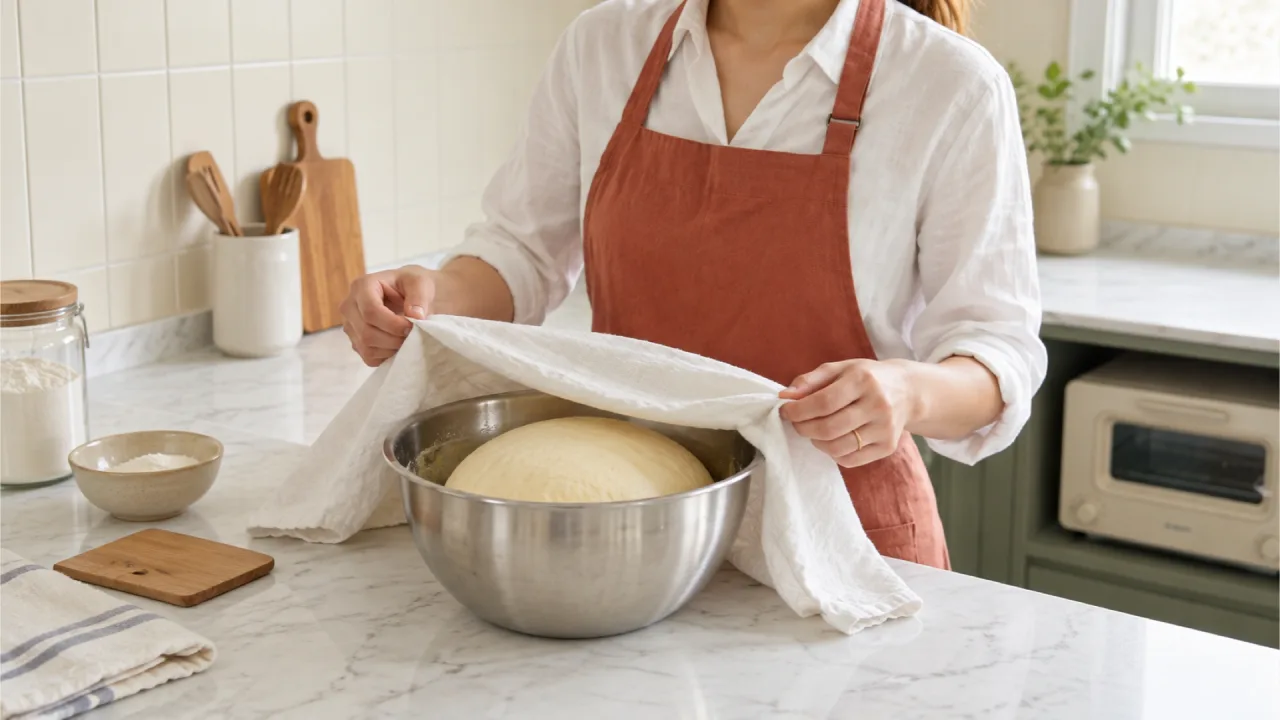
- Put the dough in a lightly oiled bowl, cover it, and let it proof for 1 to 1 hour 30 minutes. It does not have to double; it just needs to be visibly puffed up.
- Press out the gas and divide the dough into four. Roll each piece into a rectangle, fold in both sides to the width of the pan, and roll it up. Place the pieces side by side in the pan, seam side down, cover, and proof for 40 to 50 minutes until puffed.
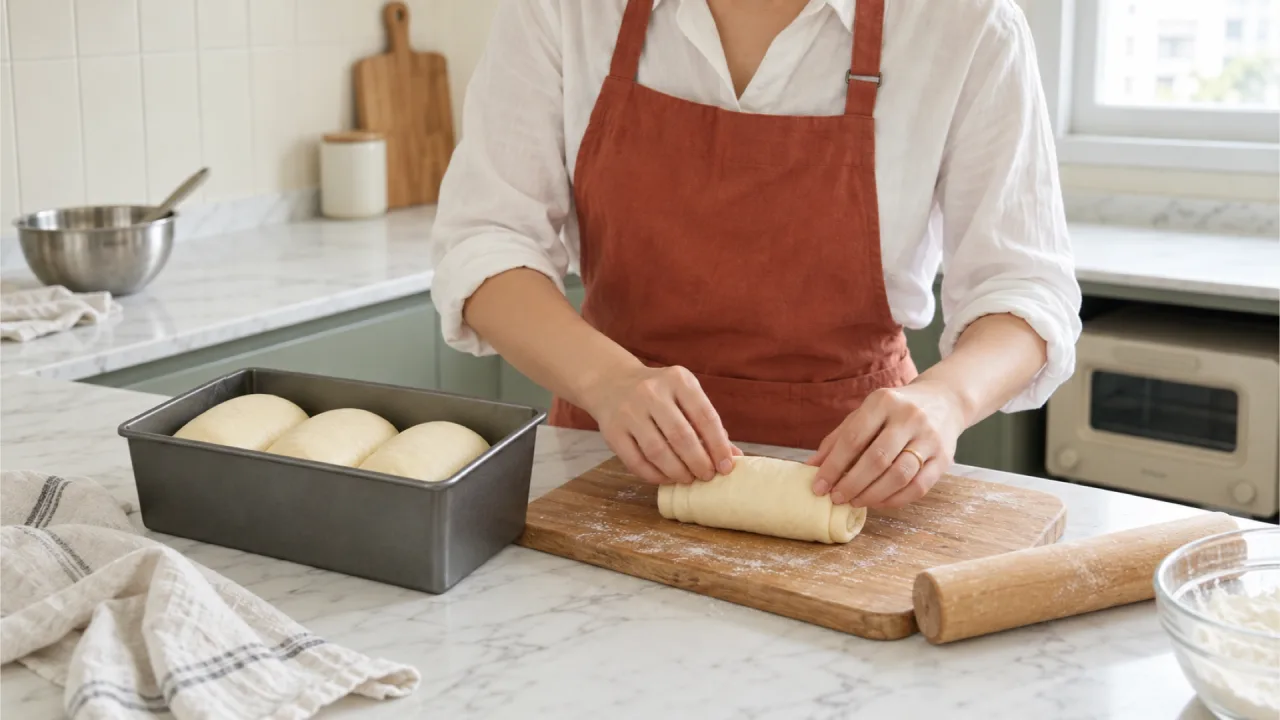
- Toward the end of proofing, preheat the oven to 177°C. Brush milk over the top of the dough and bake for 30 to 35 minutes. Check that the center temperature is at least 88°C.
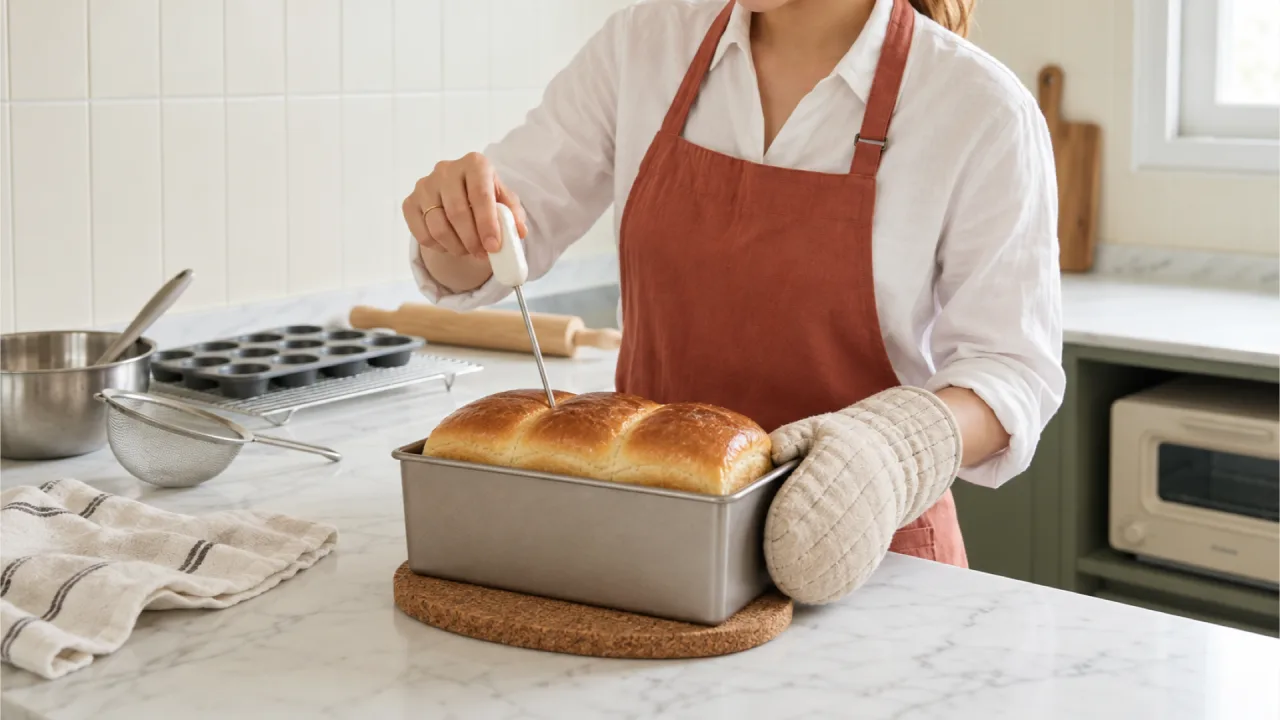
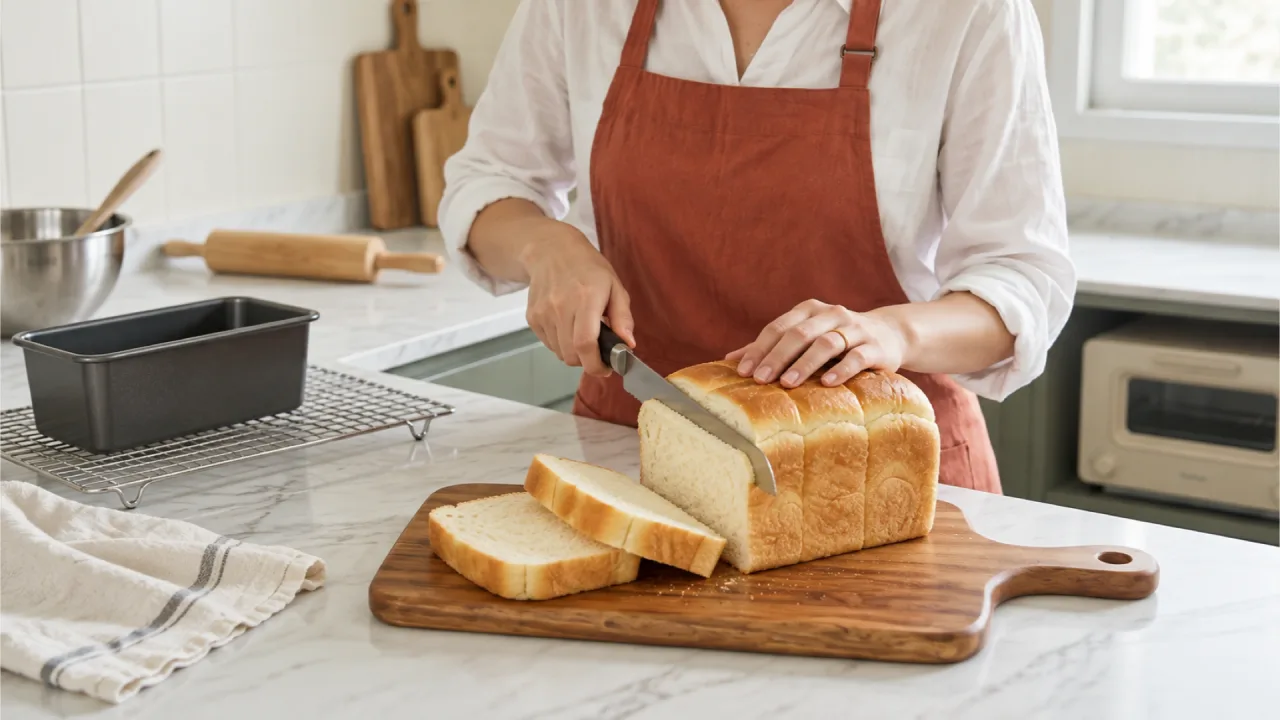
- Once it has cooled enough to handle safely, take the loaf out of the pan, let it cool completely on a cooling rack, and then slice it.
What should you check to avoid failures?
- Proofing and baking times change with the oven and the room temperature.
- Do not add yeast to hot tangzhong.
- Do not taste dough that contains raw flour and egg.
How far do you cook and cool the tangzhong?
The tangzhong does not mean boiling all the flour and water of the main dough. Put only the 14 g of bread flour, 43 g of water and 43 g of milk listed separately in the table into the pan. If you break up the lumps before putting it on the heat, you will not be chasing dry flour lumps while it cooks. Keep stirring over low heat, and when it becomes a paste that briefly holds the trail left by scraping the bottom, turn off the heat and move it to a bowl to cool.
Do not add hot tangzhong straight into the main dough. While you measure the other ingredients, leave it until it is lukewarm and check the temperature. The surface may cool while the inside is still hot, so stir once and check the whole thing. Do not try to match the amount by scraping in the hard, stuck-on bits from the bottom of the pan.
Should you go by time or by dough condition in the mixer?
The same time gives different results in different mixers. Stay within the mixer's recommended dough quantity and speed, and look for a smooth surface and the elasticity of a dough that stretches. If dough is stuck to the bowl wall, stop the machine, gather it with a spatula, and then continue. Do not put your hand or a spatula near the hook to pull the dough off while the mixer is running.
If you assume the dough should not stick to your hands at all from the start, it is easy to add too much flour. Measure the flour and liquids in the table accurately first, and check that everything is mixed in. Use the butter melted and then cooled to lukewarm. Rather than sending a lumpy dough straight to proofing just because the time is up, check the dough's condition and the mixer's operating conditions together.
How do the first proof and the proof after shaping differ?
In the first proof, look for the whole dough to be visibly puffed up and lighter. This recipe does not require waiting until it doubles. A cool room can take longer than you expect, and a warm one can be faster. Instead of moving to the next step by the clock alone, compare the dough with the height it had when you first put it in the bowl.
When you divide it into four pieces, use a scale if possible to make them similar in size. That way you avoid one big piece rising much higher than the rest. Keep the rolled seams facing down and place the pieces side by side in the pan. The dough still needs room to rise after shaping, so check the length and width of the pan. If you use a pan of a different shape, do not force the four pieces to fill it by pressing them in.
How do you check that the bread is cooked through?
The brown color on top shows how the oven heat has reached the loaf, but it cannot replace checking that the inside is done. Check the center temperature in the middle of the loaf, not near the edge or the bottom of the pan. After taking it out, let the hot pan cool enough to handle safely and move the loaf to a cooling rack. Leave room for it to cool completely so the moisture that built up inside the pan does not stay trapped. Avoid slicing hot bread right away and squashing the crumb.
How do you choose baking tools?
This recipe is based on a pan of about 23×13 cm, so compare the inside dimensions rather than the product name. If you force all the dough into a pan of a different size, the proofing height and baking time change. If you use a stand mixer, check the dough hook and the recommended dough quantity, and take out the cooling rack in advance.
Frequently Asked Questions
What is tangzhong?
It is a paste made by cooking a small part of the flour with water and milk. Cool it, then add it to the main dough.
The dough is still small after the proofing time. What should I do?
Do not bake by the clock alone; check whether the dough is rising. The yeast and the room temperature both play a part.
Can I slice it while it is hot?
Hot bread squashes and loses moisture easily, so let it cool completely before slicing.
Sources & Verification Date
- Reference for milk bread ratios, proofing and baking · Verified
- U.S. Food and Drug Administration guidance on flour and raw dough safety · Verified
All materials have been verified from official announcements and may have changed since verification.