Bake Butter Cookies If You Have Room-Temperature Butter
쿠팡 파트너스 활동으로 수수료를 받을 수 있음
This page contains Coupang Partners affiliate links; the operator may earn a commission.
Key Takeaway
With 227 g of room-temperature unsalted butter you can make about 16 butter cookies. Chill the rolled dough for an hour, then bake at 177°C for 10 to 12 minutes. Cold dough and an even thickness matter most.
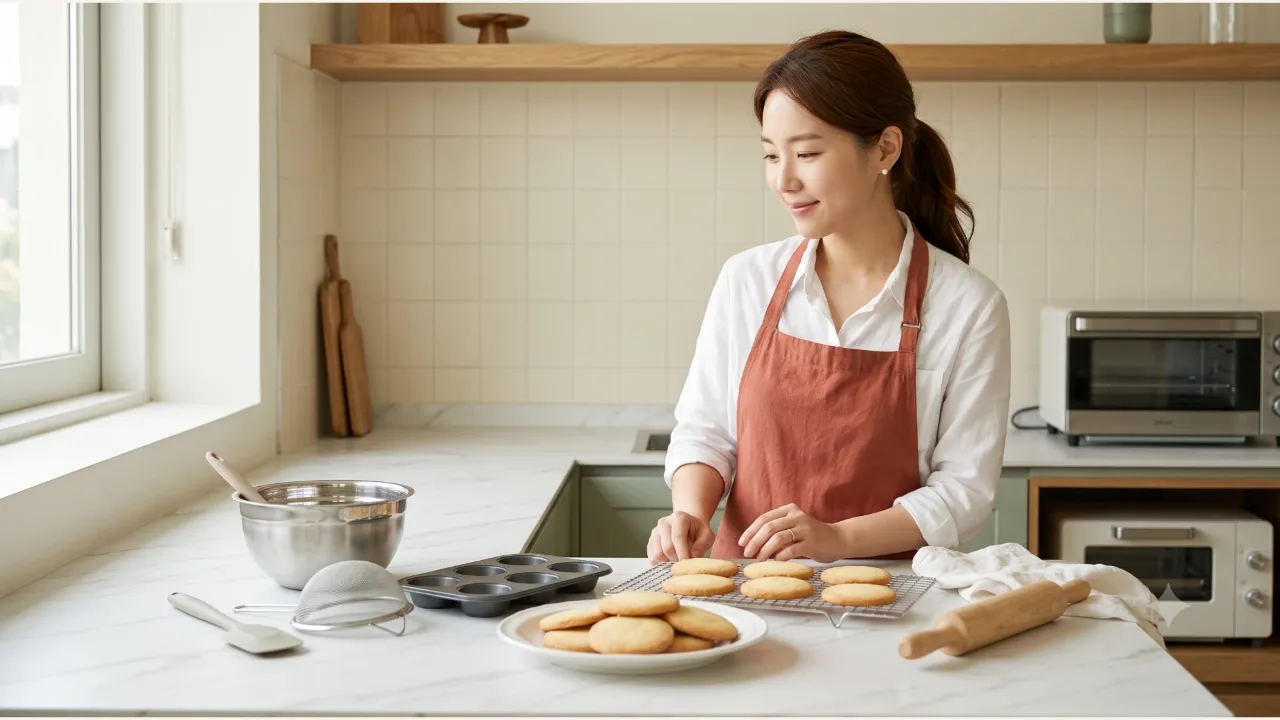
What ingredients do you need?
Spoon measures: a tablespoon here is one regular Korean table spoon, leveled off (about 15 ml), and a teaspoon is one teaspoon (about 5 ml).
| Ingredient | Amount | Note |
|---|---|---|
| All-purpose flour | 240 g | |
| Unsalted butter | 227 g | Soft enough to take a dent when pressed |
| Sugar | 100 g | For the dough |
| Large egg yolks | 2 | |
| Vanilla extract | 2 teaspoons | |
| Salt | 1/2 teaspoon | |
| Coarse sugar | 66 g | For rolling the outside |
How do you make them, step by step?
- Beat the soft butter with 100 g of sugar and the salt for 2 to 3 minutes until evenly combined.
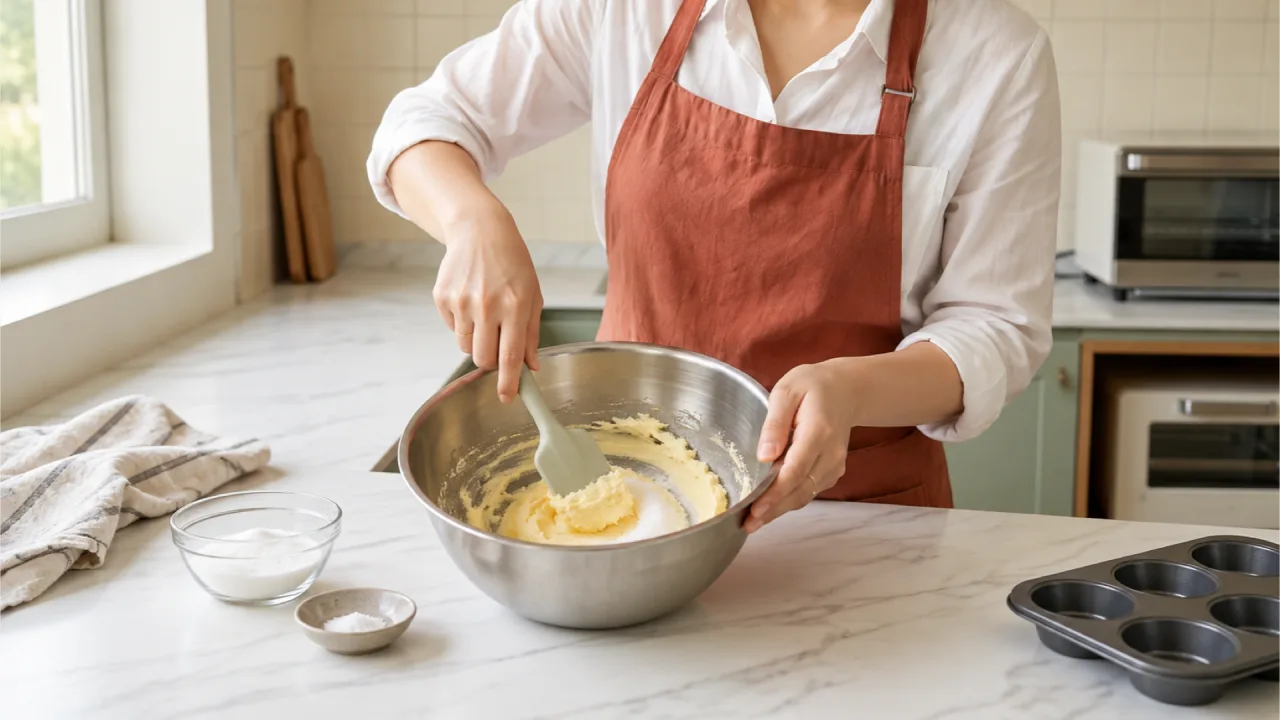
- Mix in the egg yolks and vanilla until no lumps are left.

- Add the flour and stop as soon as no dry flour is visible. Roll the dough into a log about 30 cm long.

- Wrap the dough in plastic wrap and chill it in the refrigerator for at least an hour until firm.

- Preheat the oven to 177°C. Roll the outside of the log in coarse sugar, slice it about 1.9 cm thick, and place the slices on the pan 2.5 cm apart.
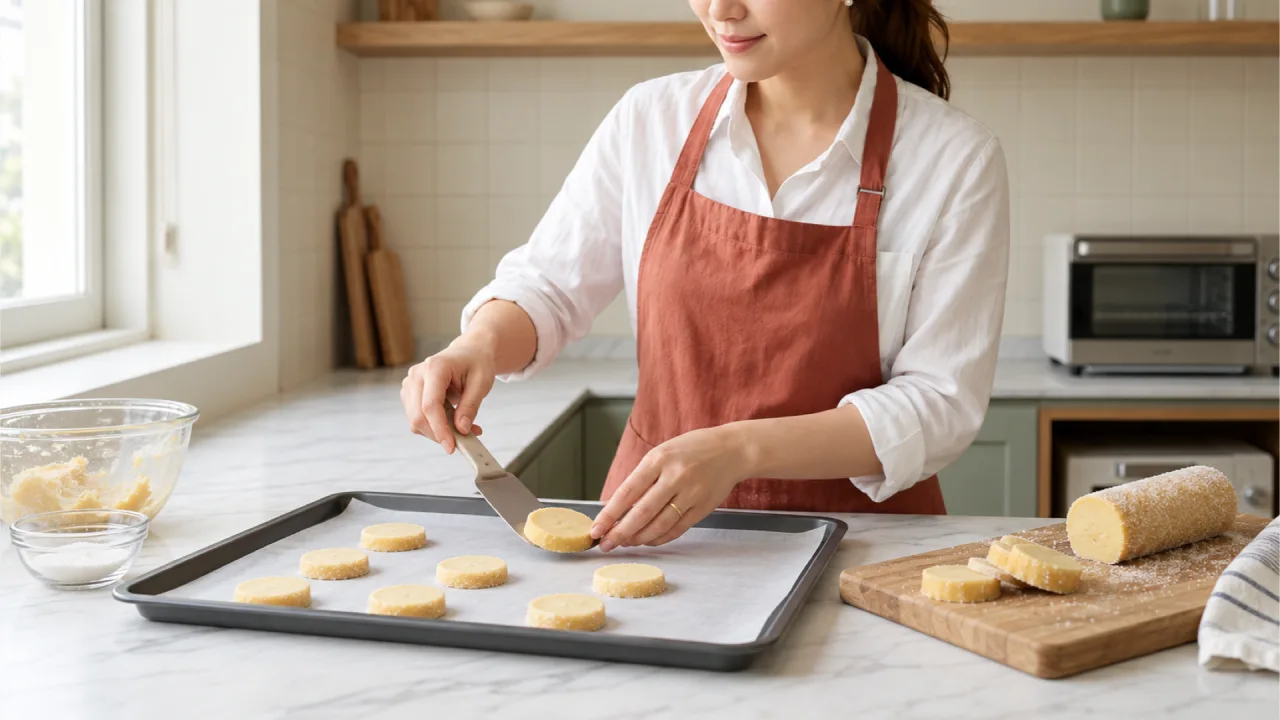
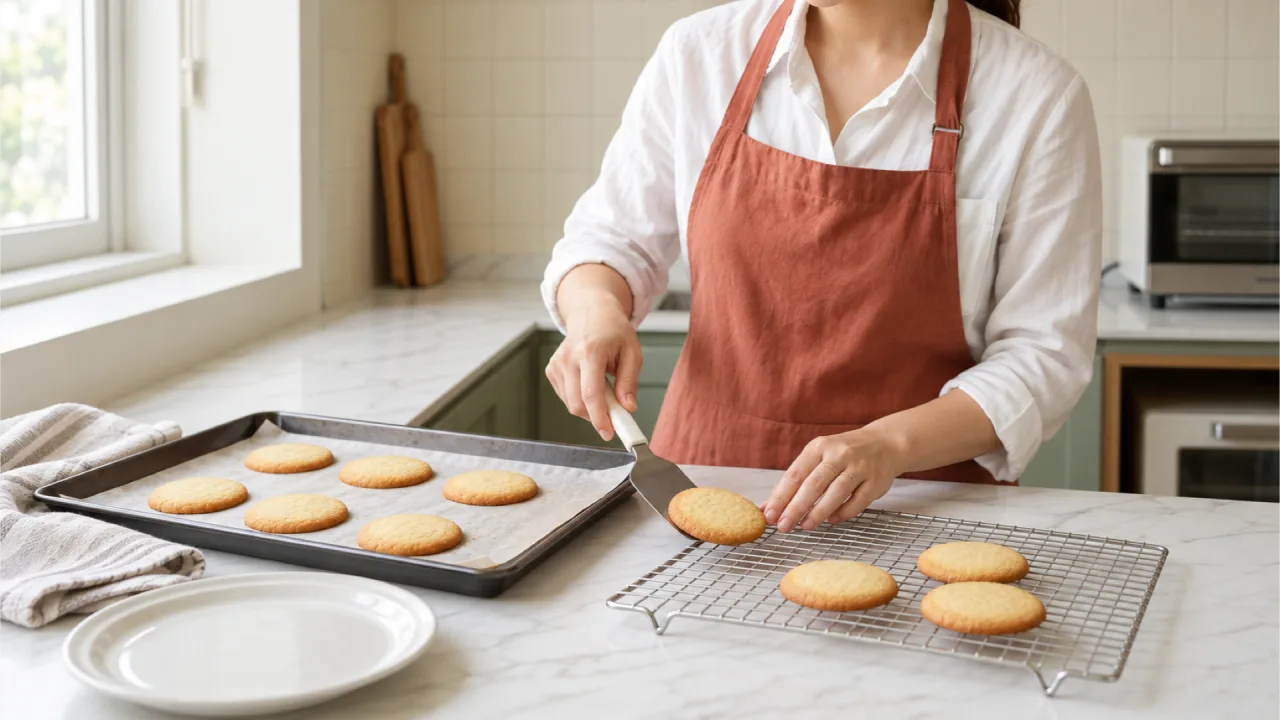
- Bake for about 10 to 12 minutes, until the edges turn light brown. Let the cookies cool completely on the pan before moving them.
What should you check to avoid failures?
- This recipe is for slicing and baking, not for piping with a pastry bag.
- If the dough squashes and loses its shape as you cut, chill it again until firm and then slice.
- Do not taste raw dough that contains flour and eggs.
How soft should the butter be?
This is not a recipe where you pour in melted butter. Aim for butter that takes a dent when you press it with a finger but still holds its shape. If cold, hard lumps remain, it is hard to blend them evenly with the sugar. If the butter runs like a liquid, shaping the log becomes a different job. Check the actual state of your butter rather than going by how long it has sat out.
Using only two yolks is also worth checking. If you add two whole eggs, or add the whites because you hate to waste them, the moisture no longer matches the table. Add the flour only after the yolks and vanilla are mixed into the butter. Gathering the butter stuck to the bowl wall with a spatula saves you from mixing while only watching the flour at the bottom.
Where should you stop mixing after adding the flour?
Cookie dough is not like sandwich bread, where you knead for a long time to build a smooth, elastic dough. Stop mixing once no dry flour remains and the dough comes together. If you keep running a whisk or keep working it by hand after the flour has disappeared, the texture can end up different from what was intended. If small crumbs are left, scrape the bowl wall with a spatula and press them into the main dough.
When you roll the log, keep the middle and the ends about the same thickness. If the ends taper and only the middle is thick, slices of the same thickness will still give cookies of different sizes. Wrap the plastic close to the surface of the dough so the log keeps its shape in the refrigerator. If the dough is too soft to shape, use the chilling step rather than keep handling it and warming it with your hands.
How thick should you slice the chilled dough?
This recipe is for slicing about 1.9 cm thick. Do not cut the slices thin like the flat cookies you often see in photos and then use the same baking time. Compare the thickness of the next slice against the first one and the sizes will stay similar. If the cut face squashes and loses its shape under the knife, check whether the dough is firm enough.
When you put slices on the pan, leave space between them; do not crowd them together because they do not all fit. If you set the next dough on a pan that is still hot from the last batch, the butter can soften before the cookies even go in the oven. After one batch, check how hot the pan is before putting the next dough on it. Keep the rest of the log from sitting somewhere warmer than it needs to be while you work.
Is a soft cookie straight out of the oven underbaked?
Cookies fresh from the oven can be fragile because they have not cooled yet. First check that the edges have turned light brown, and let them cool completely on the pan instead of picking them up right away. Do not bake the next batch much longer just because the first batch broke before cooling. If the bottoms are too dark, look not only at the time but also at the pan position in the oven and how hot the pan was.
How do you choose baking tools?
Pick a cookie sheet that does not touch the oven walls and leaves room for air to pass. A knife for slicing the log to an even thickness and a ruler to check the thickness make baking easier. If you bake several batches, set aside a place to cool the pan so you do not put the next dough on a hot pan.
Frequently Asked Questions
The dough is too soft to slice. What should I do?
Chill it longer until it firms up, then cut it with a knife.
The cookies break as soon as they come out. What should I do?
They are fragile while hot, so let them cool completely on the pan before moving them.
Can I use a whole egg instead?
This recipe is built on two egg yolks. Adding the white changes the moisture and the texture.
Sources & Verification Date
- Reference for butter cookie ratios and chilling · Verified
- U.S. Food and Drug Administration guidance on flour and raw dough safety · Verified
All materials have been verified from official announcements and may have changed since verification.